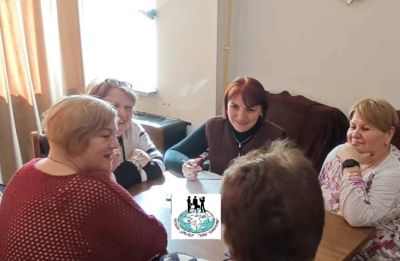
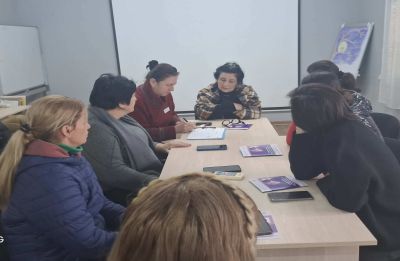
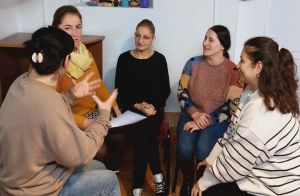
"Women’s Voice" is a Kutaisi mutual assistance group, one of the most active, goal-oriented, and strongest in our project area.
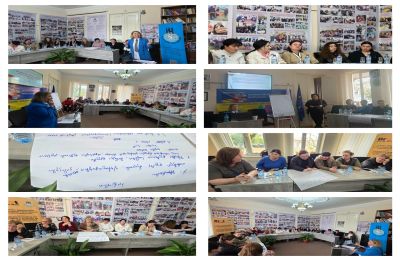
The latest meeting of the group was a bit unusual. It was an evaluation of the work done and the results of their civic initiatives.
During the evaluation, the women recalled and focused on many things. Among them were a number of important issues:
How did they use the knowledge gained during the trainings?
What was useful in implementing the community initiative?
What changed as a result of the mutual assistance group's work?
Did they motivate others?
How they want to improve their capabilities?
Working on these issues was interesting, engaging, and productive – the group participants once again saw that women's activism can bring many positive changes in the community.
The project is implemented by a coalition of non-governmental organizations: the Association of IDP Women "Consent," the Women's Information Center, and Charity Humanitarian Women Fund “Sukhumi”.
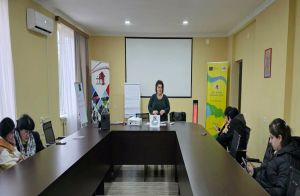
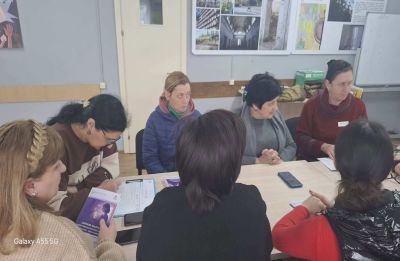
An ordinary February meeting was held in Khoni, on Abkhazeti Street.
Members of the mutual assistance group connected their name to the community and called themselves "Community Power".
They implemented a civic initiative based on the needs of the IDP community.
The project is coming to an end, and the group members openly responded to an online questionnaire downloaded to their phones. They reminded each other of the events held and tried not to miss anything:
What topics did the training cover, and how did they improve their skills?
How did they use the knowledge they gained at the training?
What was their contribution to the community initiative?
Will they be able to independently implement initiatives in the future?
Did they increase the motivation of others?
The group members spoke proudly of their contribution: "I'm happy when I see the results of my work..."
The project showed the women members of the mutual assistance group the need for civic engagement, the importance of their own responsibility and activism, and the true power of community...
The project is implemented by a coalition of non-governmental organizations: the Association of IDP Women "Consent," the Women's Information Center, and Charity Humanitarian Women Fund “Sukhumi”.
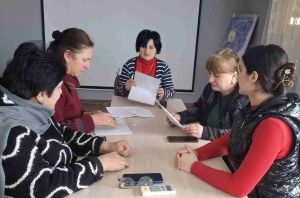
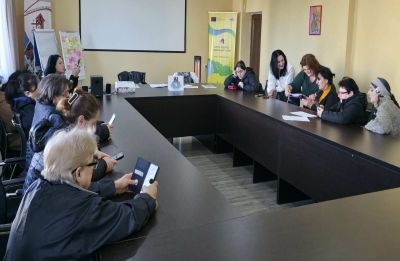
Senaki mutual assistance group "Women for the Future" summarized the results of its work over the past year. Using a specially developed questionnaire, group members assessed their participation, achievements, and the changes that participation in the project has brought to their lives and community.
During the evaluation process, participants answered the following questions: What did they gain from working in the group? How did their competence improve? What impact did they have on the community? How effectively did they apply the knowledge gained during the training sessions? Particular attention was paid to initiatives implemented throughout the year that resulted in the resolution of specific problems.
The participants noted that the work was useful and productive—the initiatives fully met the community's needs and will bring significant benefits to the settlement.
The group members note that participating in the project significantly increased their activity and awareness, strengthened their leadership skills, and increased their motivation to participate in community development processes.
The project is implemented by a coalition of non-governmental organizations: the Association of IDP Women "Consent," the Women's Information Center, and Charity Humanitarian Women Fund “Sukhumi”.
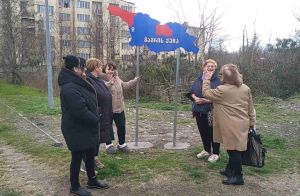
This is a mutual assistance group from Poti called "Unity Treasury." Thanks to the group's active and consistent work, noticeable changes have happened in the IDP settlement:
- The cosmetic and hygienic condition of the entrances has improved.
- The problem of water accumulation in the basements, which posed a real threat to the foundations, has been resolved. As part of a civic initiative, the group purchased a water pump.
- Signs have been installed at street entrances, making it easier to find Gagra and Abkhazia streets.
- Benches have been installed in common areas.
- A meeting area has been created, providing additional opportunities for communication.
The village residents' sense of satisfaction and gratitude gradually increased. During the project evaluation, participants highlighted both their personal development and the positive transformation of the village. The work motivated even more women to participate and became an important platform for unity, activity, and the development of new skills.
The mutual assistance group participants openly speak about their way within the project and hope to continue support in the future, as the IDP community needs more women to become active and more people to have the opportunity to develop civic responsibility.
The project is implemented by a coalition of non-governmental organizations: the Association of IDP Women "Consent," the Women's Information Center, and Charity Humanitarian Women Fund “Sukhumi”.

Women from 10 municipalities met at Zoom platform to discuss current topics.
In the first part, Natia Akhalaia, representative of the International Organization for Migration (IOM) Kutaisi office, spoke about legal and illegal migration, statistics, individual services regarding return to Georgia, support for returning migrants, and grant projects.
In the second part, Linda Chikhladze, digital security trainer, introduced participants to important aspects of digital security, common threats, best practices, and protection tools.
Participants asked questions on both topics and received competent answers.
The project is implemented with the support of the organization Brot
für die Welt - Evangelischer Entwicklungsdienst (Germany)

Crafts have a long tradition in Georgia. Women knew how to sew, knit, embroider, and even prepared their own dowries. Even today, many women are interested in handicrafts.
At the request of women, our organization has opened sewing and cutting courses in several municipalities. Many women have improved their skills and even started their own small businesses.
Now it's the turn of Khurcha Women Support Center (Zugdidi Municipality). We've already brought sewing machines and the necessary materials. During two months, the women will learn a lot from the teacher, who has enthusiastically started her work.
The project is implemented with the support of the organization Brot
für die Welt - Evangelischer Entwicklungsdienst (Germany)
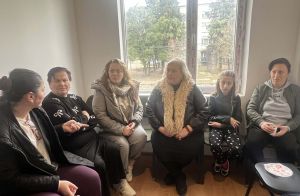
Migration is a serious and highly relevant topic. The relationships between parents who have emigrated abroad and their children who remained at home are particularly emotional.
These issues leave no one indifferent: there are many examples, both from their own families and from their circle of relatives and neighbors.
These cases were discussed at meeting with women and girls in Kopitnari IDP settlement. Moreover, a psychologist from our organization attended the meeting. There were many questions, recollections of various stories, and advice from the psychologist...
The project is implemented with the support of the organization Brot
für die Welt - Evangelischer Entwicklungsdienst (Germany)
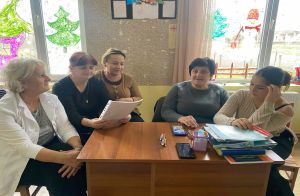
Women Support Centers actively continue informational meetings aimed at raising public awareness, increasing the number of informed citizens, preventing domestic violence, and supporting and protecting victims.
The meetings are attended by kindergarten teachers, school teachers, parents, and active representatives of communities. This diverse involvement facilitates the exchange of experiences and the identification of cases.
According to the participants, domestic violence remains a serious social problem. A new threat, against women using online technologies, was noted. According to them it is especially important to have access to information about services and programs that provide assistance and protection to victims of violence.
Women support centers will continue such informational activities to give women knowledge, support, and a sense of security.
The mood and attitude of participants were reflected in their feedback:
"Domestic violence is manifested itself in new forms, and new threats have emerged. Therefore, we need to help women at the early stages, while the problem can still be resolved."
The project is implemented with the support of the organization Brot
für die Welt - Evangelischer Entwicklungsdienst (Germany)

During the informational meeting in Khoni, participants discussed the importance of improving self-esteem and stress management with a psychologist. The meeting was interactive and included both theoretical and practical exercises. The exercises helped participants identify their strengths and understand their personal resources.
"Such tests and practical tasks help us see our capabilities more clearly and analyze how we can cope with problems."
"The stress management techniques we learned are truly useful in everyday life. It's important to know how to take care of your emotional state."
Informational meetings were also held at Women Support Centers of Zugdidi, Chokhatauri, and Khobi. One of the main topics of the meetings was the discussion of forms of violence. The issue of digital violence was of particular interest.
According to the participants, "forms of violence have become more diverse nowadays, as the online space creates new risks." They noted the importance of raising public awareness and knowledge about safety rules in the digital space.
The goal of such informational meetings at the Women Support Centers is to empower women, raise their awareness, and provide practical tools to help reduce the risk of violence in their everyday lives.
The project is implemented with the support of the organization Brot
für die Welt - Evangelischer Entwicklungsdienst (Germany)
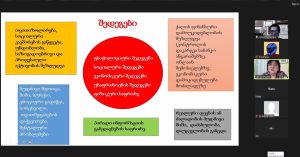
The Women’s Fund “Sukhumi” held an online workshop via Zoom with youth groups from Chokhatauri and Vani municipalities.
The session focused on technology-facilitated violence and digital safety. Participants received practical guidance on protecting personal data, securing accounts, cyber hygiene, and recognising and responding to online abuse.
The workshop was facilitated by Women’s Fund “Sukhumi” representatives Nino Chabukiani and Lali Shengelia. The discussion highlighted the importance of digital safety knowledge and open dialogue as key factors in preventing violence among young people.
The project is implemented with the support of the WAVE Network